The Evolution of Codecs (The History)
1 MPEG-2 & H.264 (AVC): The codec that built YouTube and Blu-ray
Before we talk about modern codecs like AV1, we need to understand what came before. Video streaming did not start with highly efficient compression. It evolved step by step, and two codecs played a huge role in shaping how we watch video today. Those codecs are MPEG-2 and H.264.
These technologies powered DVDs, Blu-ray, early YouTube, and the rise of online streaming. Understanding them helps us see why newer codecs became necessary.
MPEG-2: The Start of Digital Video at Scale
Back in the 1990s, storing and sending video digitally was very difficult. Raw video files were extremely large, and internet speeds were slow. MPEG-2 solved this problem by compressing video in a smarter way.
Instead of storing every frame fully, MPEG-2 saved key frames and tracked motion between frames. This reduced file sizes without destroying visual quality.
Because of this, MPEG-2 became the standard for:
- DVDs
- Early digital television
- Satellite broadcasting
At that time, it felt revolutionary. People could finally watch high-quality digital video at home.
Why MPEG-2 Started Struggling
Technology moved fast. Screens became bigger, and resolutions increased. MPEG-2 worked well for standard definition video, but when HD started becoming common, file sizes grew quickly.
To keep quality high, the bitrate had to increase a lot. This made streaming expensive and inefficient. The industry needed something more advanced.
H.264 (AVC): The Codec That Built Modern Streaming
H.264 changed everything.
Released in the early 2000s, it made video smaller while keeping the quality high. This was a huge moment for the internet. Platforms like YouTube could finally stream higher resolution videos without requiring massive bandwidth.
Blu-ray also adopted H.264 because it allowed more content to fit on a disc without losing quality.
What Made H.264 Better
H.264 introduced smarter compression techniques:
- It used flexible block sizes that adapted to motion in the video.
- It predicted movement using multiple frames instead of just one.
- It packed data more efficiently using advanced encoding methods.
- It reduced visual artifacts using built-in filtering.
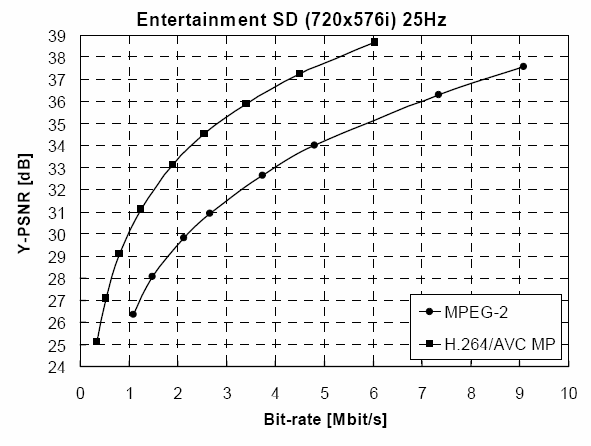
Because of these improvements, H.264 could deliver similar quality to MPEG-2 using much less data. This is one of the main reasons online video exploded during this period.
H.264 became the standard for:
- YouTube uploads
- Blu-ray movies
- Video calls
- Mobile video playback
- Early Netflix streaming
For many years, almost every device supported it.
The Tradeoff That Came With H.264
Better compression usually means more processing power. H.264 required more complex encoding compared to MPEG-2. This was acceptable because hardware became faster, and companies were willing to invest in better quality video.
But a new challenge appeared as technology moved toward 4K and higher resolutions.
Why H.264 Became Less Efficient Over Time
H.264 was designed during the HD era. When 4K video started growing, the amount of data required increased heavily.
Streaming platforms faced several issues:
- Higher bandwidth costs
- Larger storage requirements
- More data usage for mobile users
To maintain high quality at lower bitrates, the industry needed something even more efficient.
This is where the journey toward newer codecs began, eventually leading to AV1.
3 The Birth of AV1: How the Industry Came Together to Build a Royalty Free Codec
As video quality kept increasing, the problems with older codecs became more obvious. H.264 was no longer efficient enough for modern streaming, and while newer codecs like H.265 improved compression, they introduced a different challenge. Licensing became complicated and expensive.
Streaming companies wanted better quality video, but they also wanted freedom from heavy royalty fees. This situation pushed some of the biggest tech companies to work together and build something new.
That collaboration led to the creation of AV1.
Why the Industry Needed Something New
Companies like Google, Netflix, Amazon, Microsoft, and Apple were all facing the same issues.
Video traffic on the internet was growing fast. Platforms were moving toward 4K, HDR, and higher frame rates. Delivering this content using older codecs meant higher bandwidth costs and larger storage requirements.
At the same time, licensing for newer codecs created uncertainty. Different patent pools and changing fees made long-term planning difficult for companies that streamed billions of hours of video.
The industry needed a codec that was:
- More efficient than previous standards
- Open and royalty free
- Supported across browsers, devices, and platforms
This idea became the foundation of AV1.
The Alliance for Open Media
To solve these problems, several major tech companies formed the Alliance for Open Media. Instead of competing separately, they decided to build a next-generation codec together.
The goal was simple. Create a high-efficiency video codec that anyone could use without paying licensing fees.
This was a big shift from traditional codec development. Instead of a closed standard controlled by a small group, AV1 was designed as an open project driven by collaboration.
Some of the major contributors included:
- Netflix
- Amazon
- Microsoft
- Apple
- Mozilla
- Meta
Each company had its own reason for supporting AV1, but they all shared one vision. Reduce the cost of streaming while improving video quality for users.
The Alliance for Open Media
To solve these problems, several major tech companies formed the Alliance for Open Media. Instead of competing separately, they decided to build a next-generation codec together.
The goal was simple. Create a high-efficiency video codec that anyone could use without paying licensing fees.
This was a big shift from traditional codec development. Instead of a closed standard controlled by a small group, AV1 was designed as an open project driven by collaboration.
Some of the major contributors included:
- Netflix
- Amazon
- Microsoft
- Apple
- Mozilla
- Meta
Each company had its own reason for supporting AV1, but they all shared one vision. Reduce the cost of streaming while improving video quality for users.
What Makes AV1 Different
AV1 focuses heavily on efficiency. It utilizes more advanced prediction models, flexible block structures, and smarter methods for encoding motion and textures.
In simple terms, AV1 tries to deliver the same visual quality using fewer bits. This means:
- Lower bandwidth usage
- Better streaming on slower connections
- Smaller storage requirements
For platforms like YouTube and Netflix, even small improvements in compression can result in significant cost savings at scale.
The Tradeoff: Power and Complexity
The biggest challenge with AV1 is complexity. Encoding AV1 video requires more processing power compared to older codecs. Early adoption was slow because hardware support was limited.
Over time, hardware manufacturers started adding AV1 decoding support into GPUs, smartphones, and smart TVs. As devices improved, AV1 became more practical for real-world use.
Today, many modern browsers and streaming platforms already support AV1 playback.
Why AV1 Matters Today
AV1 represents a shift in how codecs are built. It is not just another compression format. It is a collaborative effort to make high quality video accessible without licensing barriers.
As streaming continues to grow, efficiency becomes more important than ever. AV1 helps platforms deliver higher quality video while reducing bandwidth costs, which benefits both companies and viewers.